


Strengthen your used car dealership with practical Buy Here Pay Here default management education. This page explains how to reduce charge offs, improve payment performance, and protect portfolio value through clear policies, smart technology, skilled people, and repeatable workflows. You will learn how to set measurable standards, segment risk, engage customers early, and resolve delinquencies with empathy and compliance. We also outline the data you need to track, the communication channels that work, and the training that turns collectors into trusted advisors. Whether you are building your first program or tightening mature operations, use this guide to align underwriting, collections, servicing, and recovery. Explore related topics like buy here pay here collections training and compliance education to round out your strategy.
For deeper dives on adjacent disciplines, visit buy-here-pay-here-collections-training, buy-here-pay-here-portfolio-management-education, and buy-here-pay-here-compliance-education.
Default management is not a single tactic. It is a system that blends policy, people, process, and platforms. The most resilient Buy Here Pay Here dealers standardize early stage touches, monitor risk signals, and act consistently within legal guardrails. Use the guidance below to design a right sized playbook for your market, vehicles, and customer mix. When your team knows what to do and when to do it, payment performance improves and customer relationships grow stronger.

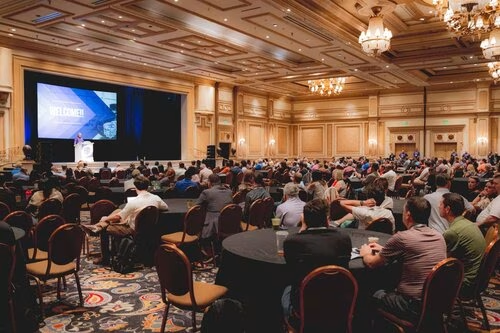
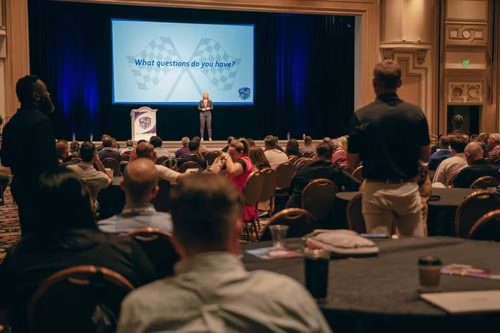
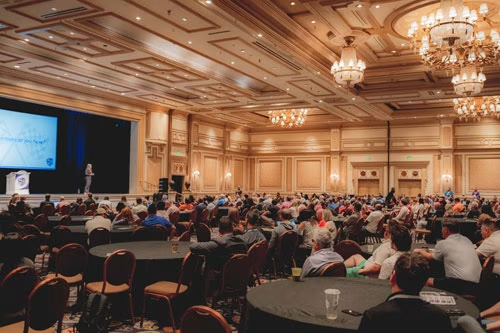
Default management in a Buy Here Pay Here model is the coordinated set of policies and actions taken from the first missed payment through resolution. The goal is to minimize losses, maximize recovery, and preserve long term customer relationships. A complete program includes prevention, early intervention, structured collections, hardship support, reinstatement strategy, repossession and recovery workflows, and post recovery analysis that feeds underwriting and inventory strategy.
The best default is the one that never starts. Prevention begins with realistic underwriting, right sized terms, and verified ability to pay. For subprime segments, align payment frequency with income cadence and offer frictionless ways to pay. At delivery, set expectations with a clear first payment due date, late fee policy, communication preferences, and a friendly walkthrough of your payment portal and accepted methods.
For a fuller framework on underwriting choices that influence default, see buy-here-pay-here-underwriting-education and buy-here-pay-here-credit-policy-education.
Establish day count based touch plans. For example, Day 1 courtesy reminder, Day 3 friendly check in, Day 7 promise to pay follow up, Day 12 hardship discussion, Day 16 final notice, then escalation. Use positive, clear language and provide easy payment options in every interaction. Document all promises and outcomes. Use your dialer and messaging platform to automate reminders while preserving human outreach when accounts show risk signals like missed promises or location changes.
To build staff capability for early stage resolution, explore buy-here-pay-here-collections-training and dealer-collections-training.
Collectors succeed when they connect, listen, and guide. Use open ended questions to learn the true obstacle and co create a plan. Avoid pressure that could be perceived as unfair or deceptive. Train your team on tone, pacing, de escalation, and documentation. Offer quick ways to pay during the call to capture momentum. Build a culture that celebrates cures, not just repossessions avoided.
Reinforce skills through ongoing development with buy-here-pay-here-management-training and dealer-leadership-development-training.
Economic bumps happen. Have a standardized hardship policy with eligibility rules, limits, and required proofs. Use short extensions to bridge temporary gaps, and capture written agreements that reset the calendar. If a vehicle is repossessed, reinstatement can often create a better outcome than auction, especially when equity is thin. Price reinstatement consistently, based on your internal loss avoidance model, and make the steps easy to understand.
For deeper guidance, review buy-here-pay-here-reinstatement-strategy-training and buy-here-pay-here-portfolio-recovery-education.
When recovery is necessary, consistency and compliance protect your brand. Use licensed, insured agents. Provide clear work orders, real time status, and stop orders when cures occur. Conduct condition reports upon intake. Decide quickly on reinstate, redeem, or sell, so holding costs do not erode proceeds. Reconcile fees, refunds, and any surplus or deficiency balances accurately. Document every step in your servicing system.
Standardize procedures with buy-here-pay-here-repo-process-education and buy-here-pay-here-loss-mitigation-training.
Collections and default management must comply with federal and state requirements and your policy. Obtain and manage consent for calls and texts. Avoid unfair, abusive, or deceptive practices. Provide accurate notices where required. If you use starter interrupt or GPS, follow state rules and your policy strictly. Train and test your team regularly and log all training.
Explore buy-here-pay-here-legal-compliance-education, buy-here-pay-here-federal-compliance-education, and dealer-compliance-best-practices for structured guidance.
Choose systems that reduce friction for customers and your team. Your dealer management system and collections platform should automate day count logic, queue work by priority, and provide omnichannel communication with clear consent management. Payment portals and apps should support card, ACH, text to pay, and cash options via retail partners. GPS and telematics tools can enhance recovery, but use them ethically and legally. Dashboards must highlight leading indicators like growing promises missed, increasing average days past due, and segment risk drift.
See buy-here-pay-here-technology-integration-education and dealer-technology-training-education for implementation best practices.
Manage by data and coach with context. Track cure rate by stage, average days to cure, roll rate by bucket, promise to pay kept rate, extensions granted, reinstatement conversion, repossessions per 100 accounts, net loss rate, and recovery per charge off dollar. Review trends weekly and monthly. Investigate outliers at the agent and strategy level. Feed insights back to underwriting and pricing. If a vehicle model or term consistently drives higher losses, adjust acquisition and structure.
For portfolio level optimization, review buy-here-pay-here-portfolio-management-education and buy-here-pay-here-portfolio-performance-training.
Hiring and development determine outcomes. Seek collectors who demonstrate empathy, curiosity, and persistence. Train them on systems, policy, negotiation, documentation, and compliance. Provide playbooks with scenario based scripts and escalation paths. Shadow and coach often, and celebrate behaviors that reduce loss and preserve customer dignity. Create a career path that rewards mastery and leadership, not just short term collections totals.
Advance your team capabilities with buy-here-pay-here-staff-training-development, buy-here-pay-here-leadership-training, and dealer-operations-management-training.
Make it easy to pay and stay informed. Offer proactive reminders before due dates, clear statements, and friendly support when plans need a tune up. Reduce friction at every step with fast payment methods and self service options. Always explain the why behind policies, and thank customers for keeping promises. A positive experience boosts word of mouth and reduces skips and disputes.
Explore dealer-customer-experience-education and used-car-dealer-customer-retention-training for practical playbooks.
Write what you do and do what you write. Keep your default management policy current, including touch plans, hardship rules, reinstatement pricing, repossession decisions, and vendor oversight. Audit monthly, record findings, and track remediation. Conduct annual tabletop exercises for complex scenarios. Use your audits to improve coaching, update scripts, and refine dashboards.
If you are preparing for a regulatory exam or investor diligence, see used-car-dealer-audit-preparedness-education and independent-dealer-compliance-education.
Keep building your knowledge with buy-here-pay-here-operations-best-practices, buy-here-pay-here-payment-processing-training, dealer-industry-insights-education, and education-and-events. For event information, see who-should-attend-bhph-united-summit and summit-agenda. If you have a topic suggestion, visit topic-suggestion.
For general information about our organization, visit about-us, blog, privacy-policy, and contact-us.
