


Build a stronger lease here pay here program with proven audit readiness education tailored for independent and subprime focused used car dealers. This page explains how to prepare for regulatory, funding partner, and internal audits while strengthening day to day operations. You will learn how to map your processes to regulations, organize files, validate calculations, and document decisions so your portfolio tells a clean and consistent story. Explore practical checklists, training paths, and next step resources that make compliance routine and repeatable, not a fire drill before exam day. For deeper skill building, see related topics such as lease here pay here compliance education, lease here pay here audit preparedness training, and used car dealer audit preparedness education. Use this guide to reduce risk, protect margins, and turn audit readiness into an everyday business advantage.
Get a step by step playbook for lease structure validation, disclosure accuracy, payment performance monitoring, collections documentation, and end of lease procedures that stand up to scrutiny. Cross link your training with topics like lease here pay here operations best practices, used car dealer technology integration training, and buy here pay here collections best practices.
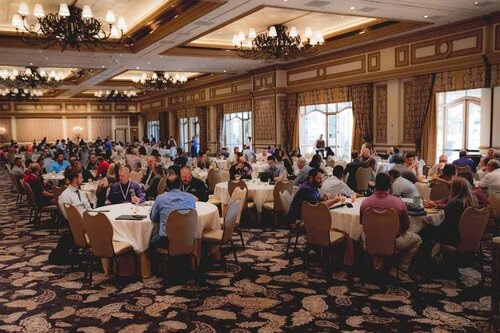
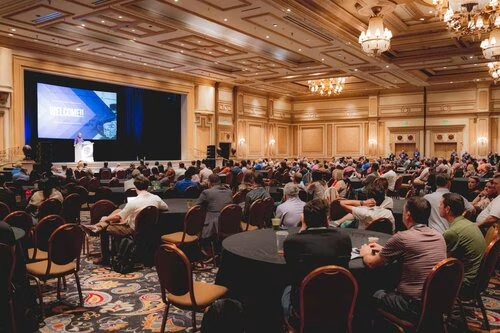
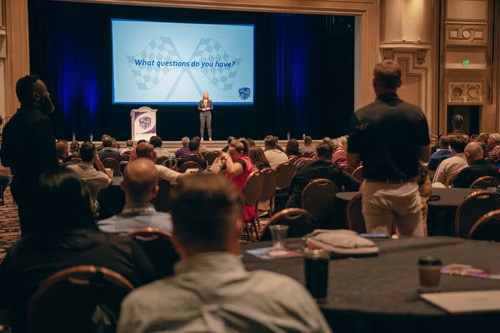
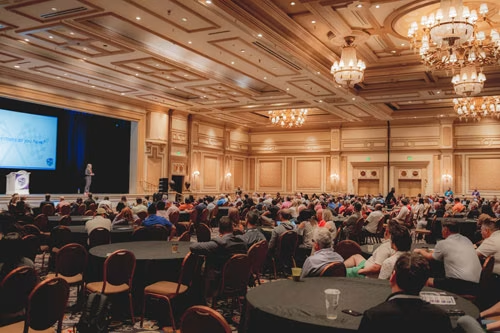
Lease here pay here combines the complexity of consumer leasing regulations with the operational realities of subprime vehicle programs. That means your store must manage nuanced disclosures, lease specific accounting, non accrual handling, payment applications, lease charge calculations, and end of term options. Auditors and examiners expect consistent documentation, accurate math, and verifiable policy execution. When your team is audit ready every day, you lower legal exposure, protect access to capital, improve customer outcomes, and preserve profitability through fewer charge offs and smoother returns.
This education guide shows your management and frontline teams how to translate regulations and policies into workflows, templates, and reports. It offers practical alignment with lease here pay here regulatory compliance training, independent dealer compliance education, and dealer risk management training. The outcome is not just passing an exam. It is building a culture where clean files, clear notes, and accurate numbers are the norm.
An audit playbook translates policies into daily actions. It assigns owners, artifacts, and evidence for every critical control. It also sets cadence for spot checks and internal audits so gaps are found and fixed early. Pair this with lease here pay here management training to drive accountability and coaching.
Strong files answer who, what, when, why, and how without extra explanation. That means verified identity and income, reasoned underwriting, truthful advertising, proper adverse action timing, accurate disclosures, and clear audit trails for changes. Regular file reviews are essential. Cross train your team using lease here pay here underwriting education, lease here pay here credit policy education, and lease here pay here accounting education.
Audit readiness depends on reliable data. Start with your DMS and accounting system alignment. Every lease must tie to a clear schedule in the general ledger. Payment applications should follow policy consistently with audit logs. Integrations must be tested after every update. Expand skills with lease here pay here technology integration training and used car dealer technology integration training.
Collections is where examiners spend time because it drives customer outcomes. Your team must follow respectful, consistent, and documented practices that reflect policy, not seat of the pants judgment. Training should include call cadence, hardship standards, deferral criteria, and repossession decision trees. Reinforce routines with lease here pay here collections training, buy here pay here collections best practices, and lease here pay here payment performance education.
End of lease is a unique LHPH risk point. Auditors evaluate whether you followed the contract, disclosed options clearly, calculated fees correctly, and treated customers consistently. Build a standard return appointment packet and photo checklist. Train your team to guide customers through inspection results and options fairly. Enhance your approach with lease here pay here vehicle return process training and lease here pay here lease structure education.
Audit readiness is a team sport. Create role specific pathways so each person knows their responsibilities and how to document them. Use micro training and weekly huddles to review one control at a time. Rotate internal audits so staff learn by doing. For structured curricula, explore lease here pay here dealer training program, lease here pay here operations training, and dealer professional development training.
Your policies must reflect federal protections as well as state leasing rules. Examiners check timing and content of adverse actions, privacy notices, fee disclosures, and how you manage disputes and credit reporting. When in doubt, document your rationale, keep consistent, and train the team. Add depth with lease here pay here federal compliance training and lease here pay here state compliance education.
Numbers tell your story. Maintain trend reports that tie to policy, not just outcomes. Healthy operations create predictable results that auditors can test and trust.
Most findings are preventable with training, checklists, and simple controls. Address root causes and add a control owner to confirm the fix stays in place. Use resources such as dealer operations management training and dealer performance optimization education to harden your processes.
State rules and market dynamics influence documentation, fees, insurance handling, and notices. Multi location operators need standardized policies plus store level oversight. Smaller dealers benefit from simple checklists and weekly huddles while larger platforms require dashboards and formal audits. Align your plan with resources such as lease here pay here dealer education texas, lease here pay here dealer education florida, and lease here pay here training mid atlantic. For scaling controls, review buy here pay here multi location operations training and dealer advanced operations training.
Sustained readiness comes from rhythm. Set monthly policy refreshers, quarterly internal audits, and after action reviews whenever an exception occurs. Celebrate clean files and measurable improvement. Keep a running register of issues, owners, due dates, and status. Most importantly, connect readiness to customer experience and profitability so everyone sees the value. For ongoing learning, explore education and events, dealer peer learning education, and dealer industry insights education.
