


Stronger underwriting is the engine of a healthier portfolio. Our dealer underwriting education shows used car, buy here pay here, lease here pay here, and subprime operators how to balance risk and growth with practical, field-tested methods. Whether you are building a first credit policy or refining an advanced scorecard, you will learn how to verify income and employment, assess affordability with precision, set loan to value limits, and structure terms that promote payment performance. We translate compliance, data, and operational realities into clear decisions that frontline teams can execute the same way every day. Explore connected learning paths and in depth guides, from collections to portfolio management, so underwriting never works in a silo. Start here to align inventory strategy, pricing, deal structure, and customer communication around one goal: consistent, predictable payment behavior that compounds into sustainable profitability.
This page gathers best practices, checklists, and example policies for underwriting in independent retail, buy here pay here, and subprime environments. Use it to calibrate approval criteria, document verification steps, and connect risk tiers to pricing and terms. For deeper training and peer learning, visit education and events, featured articles, and related underwriting tracks across our site.
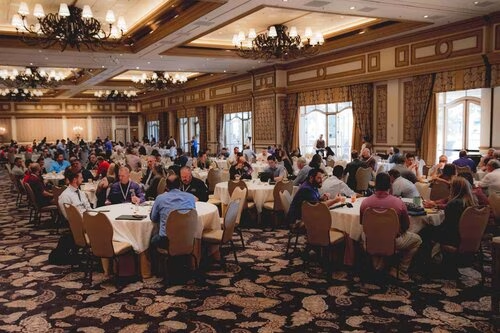
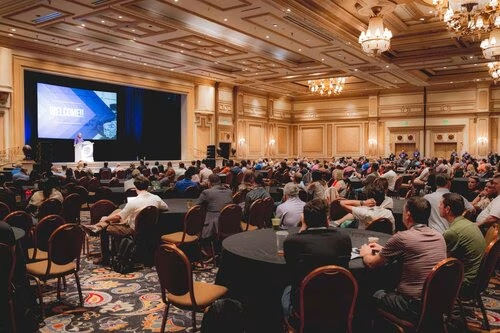
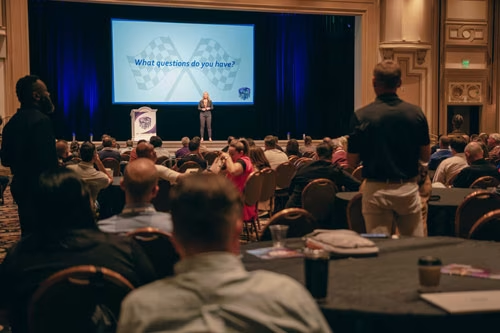
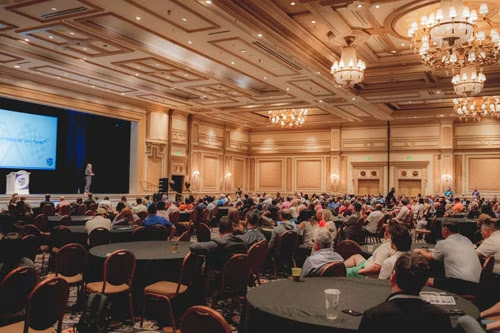
Underwriting is a system, not a single decision. A strong program connects lead quality, sales process, verification, approval rules, structure, disclosure, and handoff to collections. This page lays out the components of a practical, repeatable underwriting framework for used car and buy here pay here operators, with links to deeper modules you can use to train staff and audit your current approach.
Your credit policy should be short enough for daily use and detailed enough to remove guesswork. Define minimum and preferred thresholds, then translate them into a buy box the sales and underwriting teams can apply quickly.
Keep the buy box visible at each desk, and measure monthly exceptions. High exception rates signal unclear criteria or misaligned inventory and pricing. For a deeper look at credit policy design, visit buy-here-pay-here-credit-policy-education and dealer-compliance-best-practices.
Affordability underwriting connects net income, fixed obligations, and expected transportation costs to a payment the customer can sustain. Consistency is critical. Build a one page affordability worksheet and require it for every funded deal.
When in doubt, rework the structure instead of forcing approval. Alternative structures should be preapproved in your policy. See buy-here-pay-here-payment-performance-education for payment modeling tips.
LTV discipline is a primary lever for loss control. Establish max advance thresholds by risk tier and vehicle class, and adjust for reconditioning, warranty cost, negative equity, and add ons. Prioritize collateral that supports payment success.
Better collateral selection reduces charge offs and keeps customers on the road. Pair this with inventory planning in buy-here-pay-here-inventory-management-education and used-car-dealer-inventory-management-training.
Translate risk tiers into down payment, APR, and term guidelines. Shorter terms with realistic payments outperform long terms with stressed cash flow. Document minimum down payment by tier and set maximum term caps by collateral class and mileage.
For expanded profitability modeling, visit dealer-profitability-training and buy-here-pay-here-profitability-training.
Small process gaps create big losses. Build simple, teachable fraud checks into your workflow.
Document these steps in your underwriting checklist and train quarterly. See buy-here-pay-here-compliance-education and dealer-risk-management-training for more.
Compliance supports sustainable growth. Your underwriting policy should reference applicable laws and your procedures should show how you comply during every deal. Focus on consistency and documentation.
Browse used-car-dealer-regulatory-compliance-training, buy-here-pay-here-legal-compliance-education, and federal-compliance-training-for-dealers for detailed guidance.
Great underwriting is a team habit. Define roles so each step is owned and auditable. A daily huddle keeps the pipeline moving and reinforces policy adherence.
Use the training resources in dealer-professional-development-training, dealer-operations-management-training, and buy-here-pay-here-management-training to upskill teams.
Adopt tools that reduce manual effort and improve decision quality. Start with a simple LOS and add integrations as volume grows. Monitor a short list of KPIs and build a weekly scorecard.
Find integration planning guidance in dealer-technology-training-education and used-car-dealer-technology-integration-training.
Underwriting and collections are two halves of the same system. Build a clean handoff, then close the loop with monthly reviews of early stage performance by channel, salesperson, structure, and collateral type.
Explore more in buy-here-pay-here-collections-training, buy-here-pay-here-collections-best-practices, and buy-here-pay-here-portfolio-performance-training.
Use this checklist to standardize your process. Add it to every deal jacket or LOS record and require initials for each step.
Underwriting is local. Income patterns, vehicle preferences, insurance costs, and regulatory standards vary by region. Calibrate your buy box by market and train your team on regional nuances. If you operate multiple locations, keep a core policy consistent while allowing narrow regional addenda. For workshops and peer learning in your area, see education-and-events, dealer-workshops-and-training, and buy-here-pay-here-dealer-education-texas. Browse our blog for updates and underwriting case studies.
Strong underwriting touches sales, inventory, service, accounting, and leadership. Align your training roadmap so every department supports payment success. Sales must properly set expectations, inventory must supply repairable vehicles, service must prevent downtime, and accounting must reconcile accurately and on time. Leadership should monitor KPIs and intervene when exception rates creep up. Build your plan with help from used-car-dealer-operations-best-practices, dealer-leadership-development-training, and used-car-dealer-service-operations-training.
Expand your plan with our site wide education paths, events, and real world guides. Start with used-car-dealer-education, browse upcoming education-and-events, and study practical articles on the blog. To meet the team and explore how peers are improving performance, visit meet-us. Read how we handle information in our privacy-policy. If you have questions or topic ideas, use contact-us or submit a topic-suggestion.
